July 28, 2026
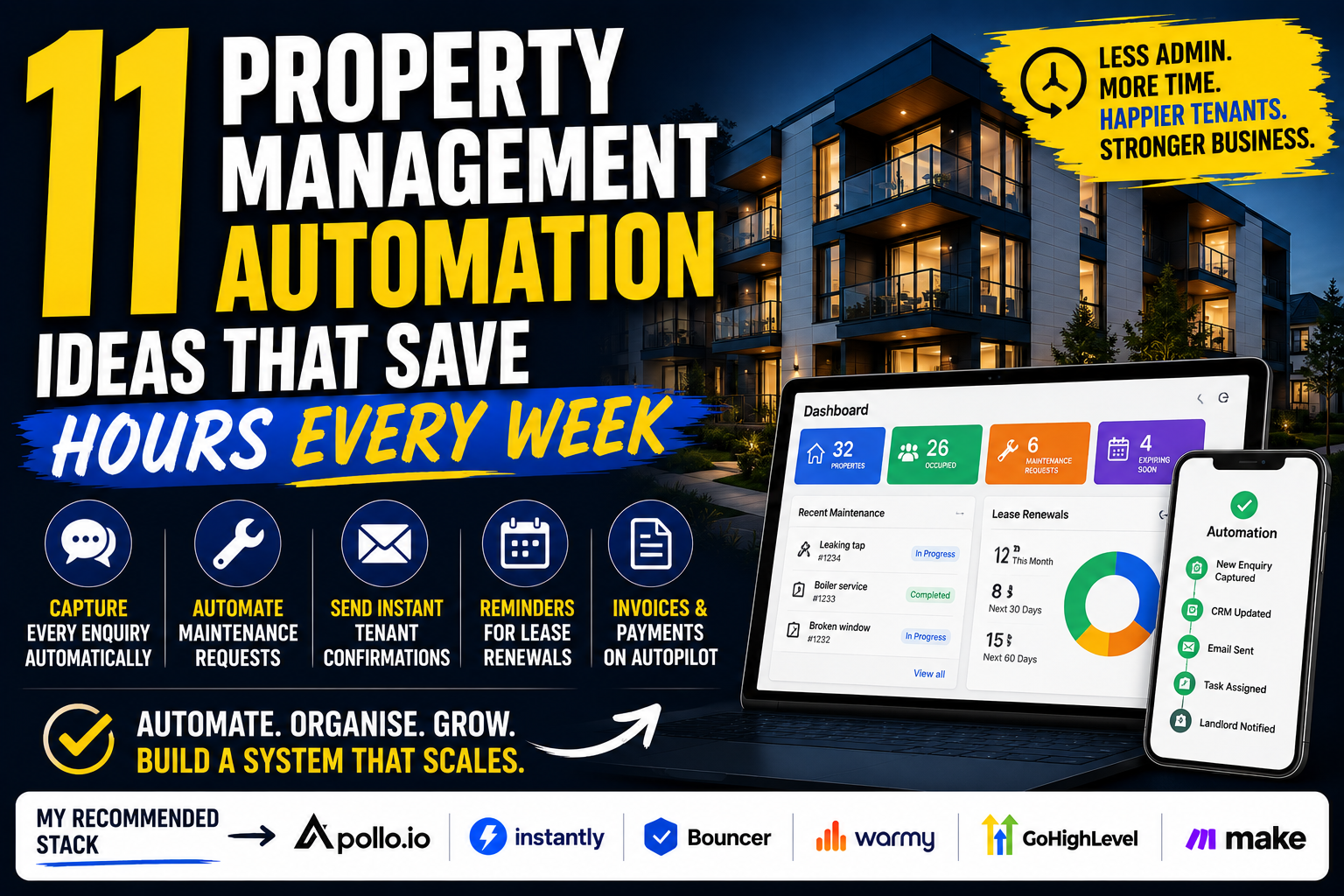
11 Property Management Automation Ideas That Save Hours Every Week
Real Estate
Click here to checkout the software
Managing properties isn't difficult because of the properties.
It's difficult because of everything surrounding them.
Tenant enquiries.
Maintenance requests.
Contract renewals.
Invoices.
Follow-ups.
Appointments.
Documentation.
As your portfolio grows, administrative work grows even faster.
That's why successful property management companies don't simply hire more staff.
They build better systems.
Here are 11 automation ideas that can save hours every week while creating a smoother experience for tenants, landlords, and your team.
Whether enquiries come from:
Every lead should immediately enter your CRM.
No manual copying.
No spreadsheets.
No forgotten enquiries.
GoHighLevel combines CRM, forms, calendars, automation, and communication tools in one platform.
Try it here: GoHighLevel
Free trial available.
Instead of manually forwarding every maintenance issue, create rules.
For example:
The request reaches the correct person immediately.
Whenever a tenant submits a request, automatically send:
Small automations dramatically improve the tenant experience.
Lease renewals often arrive sooner than expected.
Create reminders:
This gives landlords and tenants enough time to make informed decisions.
Once maintenance is approved:
Maintenance Request
↓
Assigned Contractor
↓
Calendar Booking
↓
Tenant Notification
↓
Completion Update
↓
Invoice
Nobody has to manually coordinate every step.
Most agencies use multiple platforms.
Instead of repeatedly entering the same information, connect them together.
For example:
New Tenant
↓
CRM Updated
↓
Calendar Created
↓
Email Sent
↓
Task Assigned
↓
Landlord Notified
Make is ideal for connecting these workflows.
Try it here: Make
Free plan available.
Landlords don't enjoy chasing for information.
Automatically send updates when:
Proactive communication builds trust.
If tenants aren't receiving important emails, your systems become less effective.
Before sending campaigns:
Verify addresses with Bouncer.
Try it here: Bouncer
Protect your sender reputation with Warmy.
Try it here: Warmy
Reliable communication is just as important as automation.
Not every conversation requires manual intervention.
For example:
Maintenance completed
↓
Request feedback
↓
Send review request
↓
Close ticket
Simple workflows reduce administrative work while improving service quality.
Instead of switching between spreadsheets and email chains, create one central dashboard showing:
Visibility leads to better decisions.
Automation isn't about replacing people.
It's about removing repetitive tasks.
As your portfolio grows, good systems allow your team to manage more properties without sacrificing service quality.
That's where automation delivers its biggest return.
Avoid these common issues:
Automation works best when introduced gradually.
Property management is ultimately about communication.
Automation simply ensures that communication happens consistently.
The companies that scale successfully don't necessarily have the biggest teams.
They have the best systems.
Start by automating one repetitive task.
Measure the results.
Then build from there.
Over time, those small improvements can save dozens of hours every month while creating a better experience for everyone involved.
Our latest news and trending topics