July 29, 2026
9 Best Property Management Software Platforms for Small Businesses (2026)
Real Estate
Click here to checkout the software
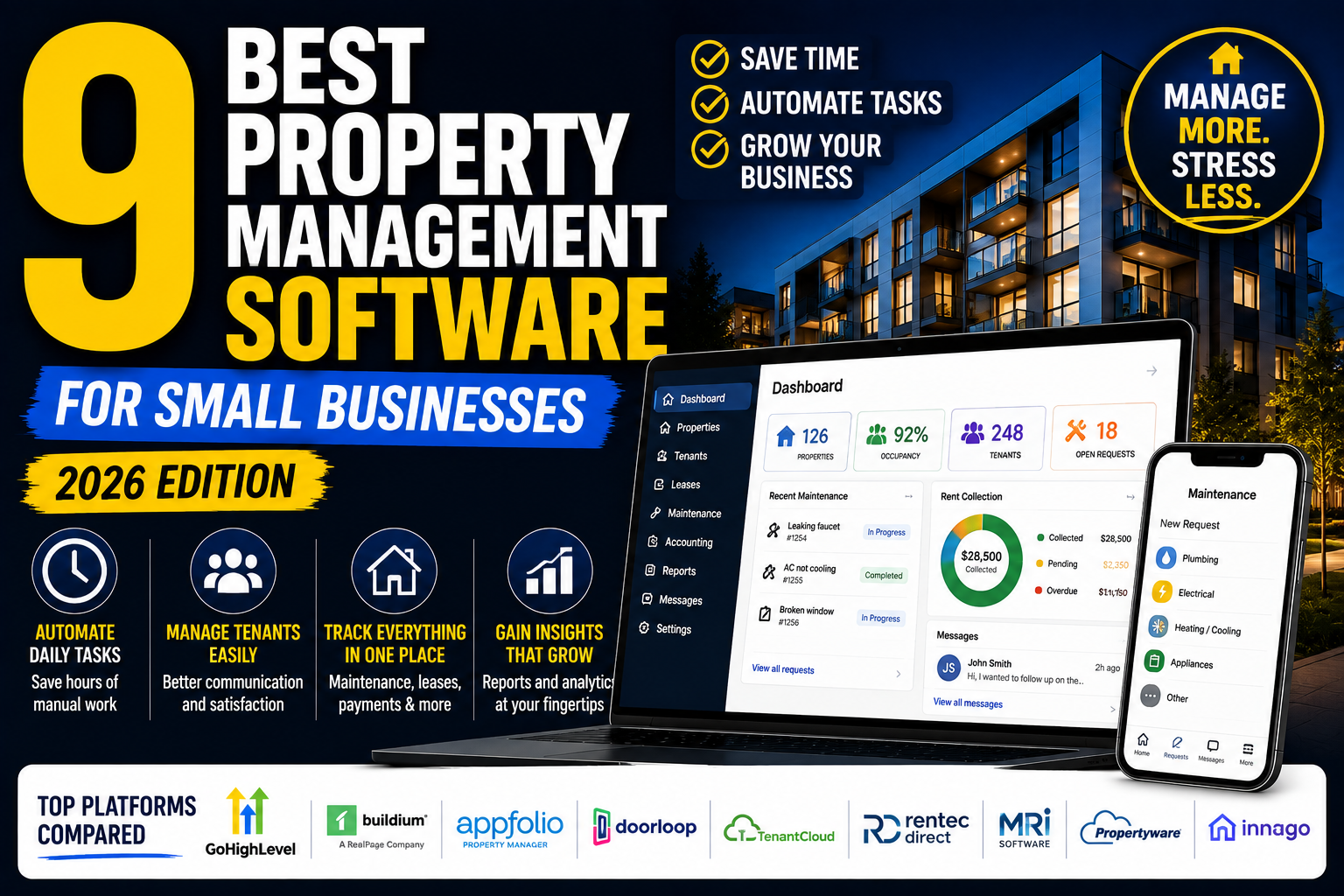
Running a property management company isn't just about managing properties.
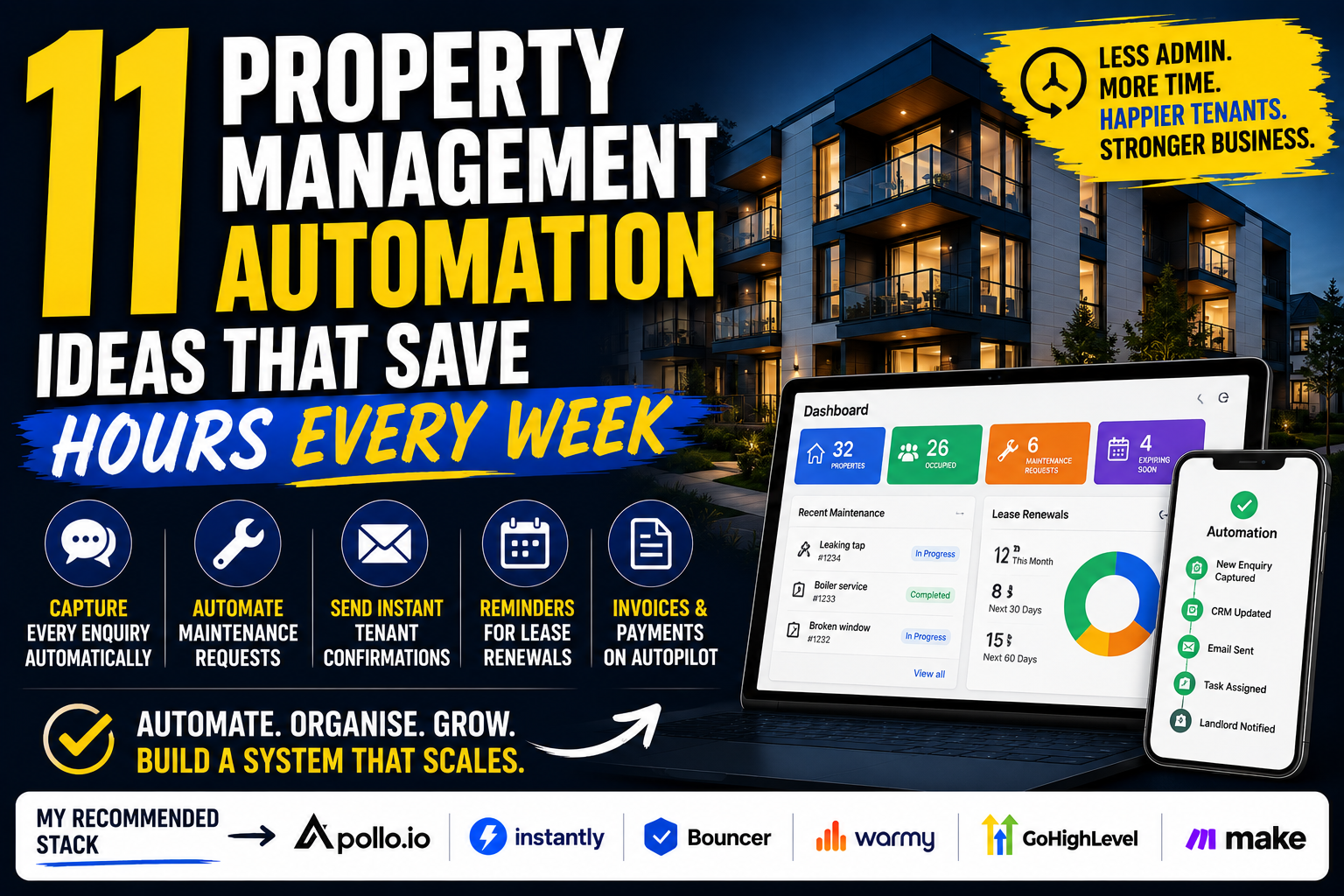
You're also managing people, contractors, maintenance requests, renewals, invoices, inspections, communication, and an endless stream of admin work.
The right software doesn't simply organise your business.
It gives you time back.
In this guide, I've compared nine popular property management platforms and explained who they're best suited for.
Before comparing platforms, it's worth defining what actually matters.
A modern property management system should help you:
The goal isn't more features.
It's fewer manual tasks.
Although GoHighLevel wasn't originally built specifically for property management, it's one of the most flexible platforms available.
You can build:
For agencies wanting one system instead of five different subscriptions, it's a compelling option.
Best for
Pros
Cons
Try it here: GoHighLevel
Free trial available.
One of the best-known names in property management.
Buildium includes rent collection, maintenance tracking, accounting, and tenant portals.
Best for
Medium-sized property managers.
AppFolio offers a polished platform with strong accounting and reporting tools.
Ideal for businesses managing larger portfolios.
DoorLoop has become increasingly popular thanks to its modern interface and relatively quick onboarding process.
Good choice for:
TenantCloud offers an attractive free plan for landlords managing smaller portfolios.
Useful for businesses wanting to test software before committing.
Rentec Direct focuses on accounting, tenant management, reporting, and lease tracking.
It's particularly popular among independent landlords.
MRI serves larger organisations requiring enterprise-level reporting and integrations.
Probably more software than most small businesses actually need.
Propertyware focuses heavily on single-family rental portfolios.
Good option for businesses specialising in residential rentals.
Innago continues growing because of its generous free offering and straightforward interface.
A sensible choice for landlords managing a smaller number of properties.
It depends on your needs. Businesses wanting an all-in-one CRM and automation platform may prefer GoHighLevel, while dedicated property managers often choose platforms like Buildium, DoorLoop, or AppFolio.
Yes. Even small businesses can save significant time by automating maintenance requests, reminders, tenant communication, and internal workflows.
Absolutely. Many modern platforms allow you to automate confirmations, reminders, renewals, maintenance updates, and review requests.
The best property management software isn't necessarily the platform with the most features.
It's the one your team actually uses every day.
Focus on reducing repetitive work, improving communication, and building systems that can grow with your business.
That's where software delivers its biggest return.
Our latest news and trending topics