June 25, 2026
Why Your Cold Emails Aren't Getting Replies (And How I'd Fix Them)
Cold Emails Nt Working
Click here to checkout the software

You've spent hours building a prospect list.
You've written what you think is a great cold email.
You hit send.
Then...
Nothing.
No replies.
No meetings.
No clients.
If that sounds familiar, you're not alone.
I've reviewed dozens of cold email campaigns over the years, and surprisingly, the software is rarely the problem.
Most campaigns fail because of five common mistakes that are completely avoidable.
Here's exactly how I'd fix them.
This is by far the biggest issue.
People spend hours improving subject lines while emailing people who were never going to buy in the first place.
Before writing a single email, ask yourself:
Finding the right prospects is half the battle.
For prospecting, I'd still choose Apollo because of its filtering capabilities.
You can narrow companies by:
Instead of sending 1,000 generic emails, I'd rather send 100 highly targeted ones.
Try it here: Apollo.io
Free plan available.
One of the most common beginner mistakes is buying a new domain on Friday and sending 2,000 emails on Monday.
Email providers hate that.
Your domain needs to build trust over time.
Before launching any campaign, I'd warm my inbox using Warmy.
Try it here: Warmy
Even the best email won't convert if it lands in spam.
Deliverability should always come before copywriting.
A surprising number of businesses never verify their email lists.
High bounce rates damage your sender reputation.
That's why every campaign I launch goes through Bouncer first.
Try it here: Bouncer
It only takes a few minutes, but it protects months of work.
Here's an example of what most cold emails look like:
Hi John,
I hope you're doing well.
We help businesses increase revenue through innovative marketing solutions...
Nobody replies to that.
Instead, make your email about the prospect.
Mention something specific.
Show you've done your research.
Keep it short.
Your goal isn't to explain your service.
Your goal is to start a conversation.
Most replies don't come from the first email.
They come from the second, third or fourth.
The problem?
Most people forget to follow up.
That's why I automate my sequences using Instantly.
Try it here: Instantly
Free trial available.
Instead of remembering who to email next, I let the platform handle it automatically.
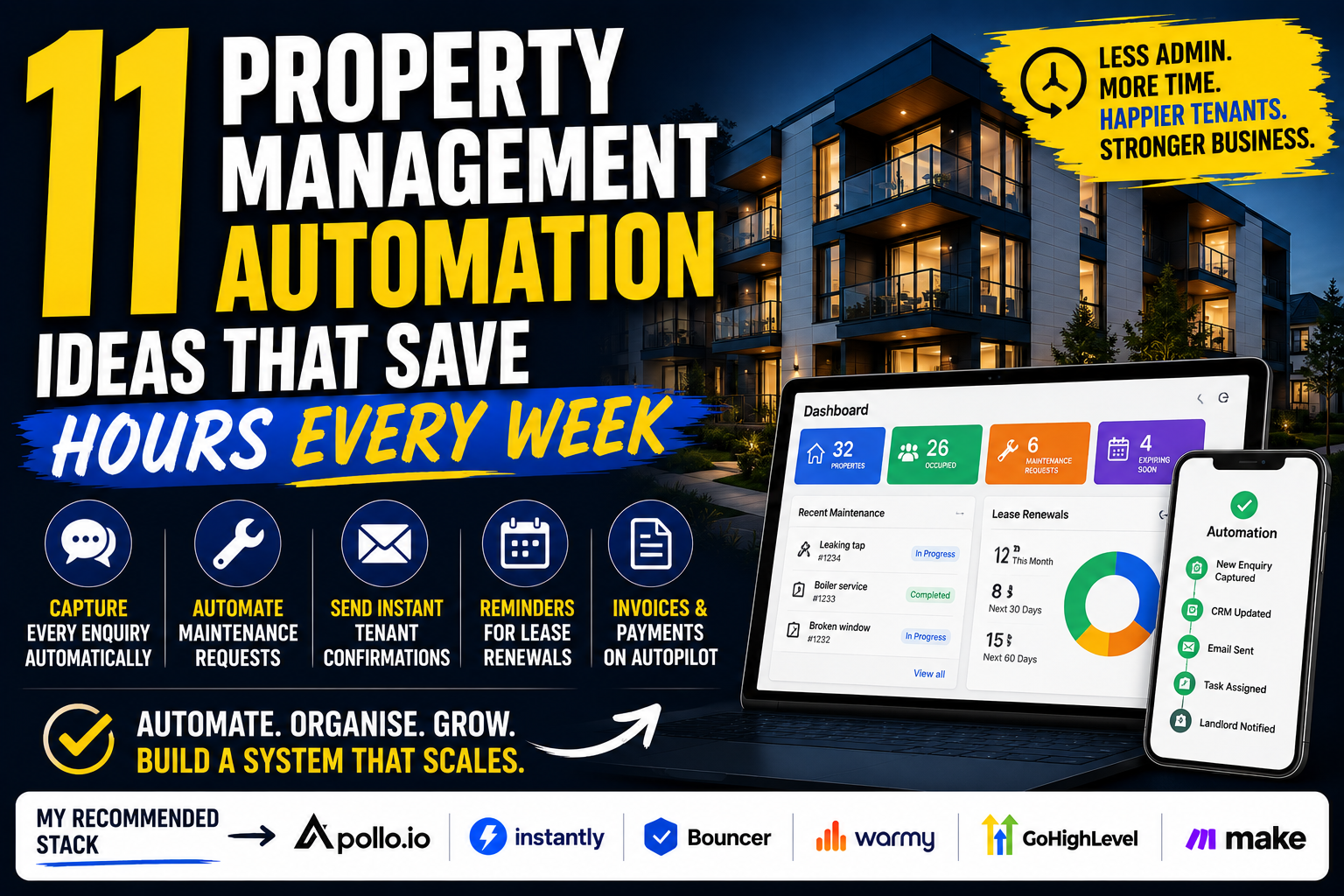
If I were building an outbound system today, it would look like this:
Apollo
↓
Bouncer
↓
Warmy
↓
Instantly
↓
GoHighLevel CRM
↓
Booked Meeting
Simple.
No unnecessary software.
No complicated workflows.
Just a repeatable system.
Once campaigns start generating meetings, repetitive tasks quickly become a bottleneck.
I'd connect everything using Make.
For example:
Try it here: Make
Free plan available.
Automation doesn't replace good sales.
It gives you more time to focus on them.
Most cold email campaigns don't fail because of poor software.
They fail because of:
Fix those five things and you'll outperform most outbound campaigns without buying dozens of expensive tools.
In my experience, keeping your stack simple is usually the smartest decision.
Spend less time comparing software.
Spend more time talking to prospects.
That's where the real growth happens.
Our latest news and trending topics